
Hearts: Card Game
MobilityWareCard
4.64.58K Reviews
- Version
- 2.5.0.2775
- Installs
- 1.00M
- Age Rating
- Everyone
Screenshots
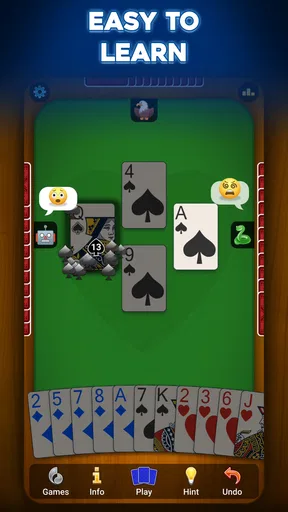

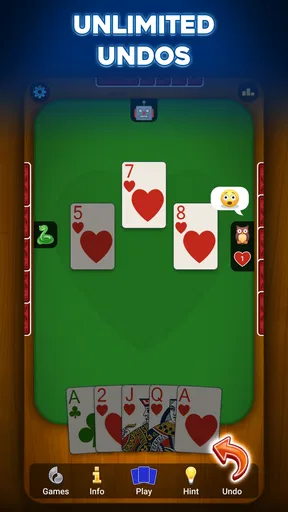
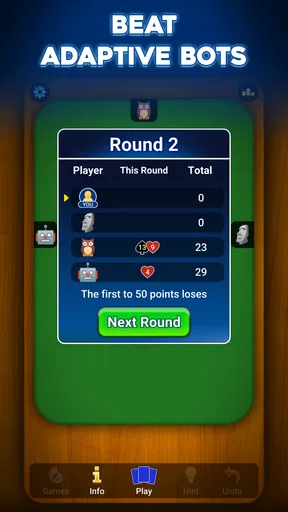
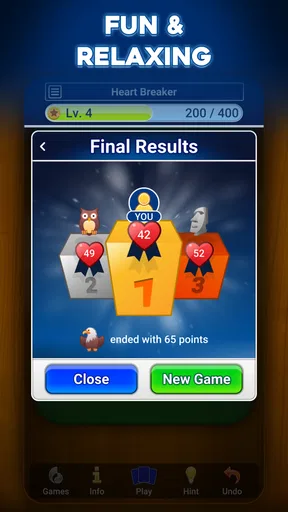
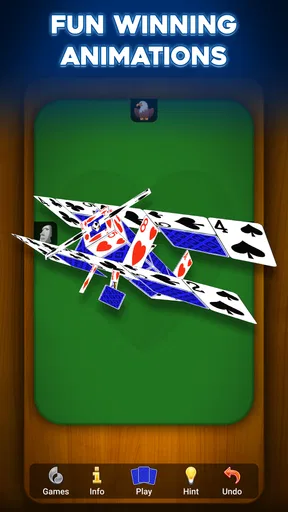
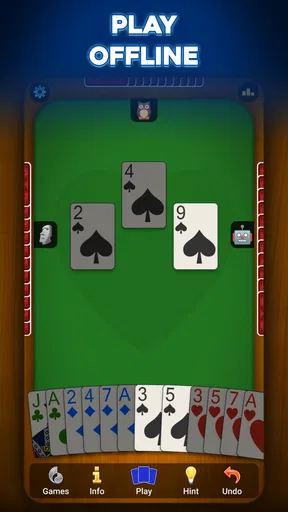
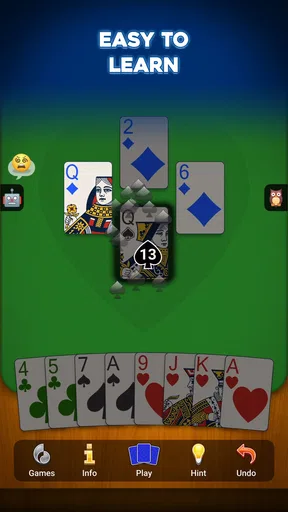
Our Review of Hearts: Card Game
 Analysis by Appyee
Hearts: Card Game is the kind of mobile game I open when I want a quiet challenge rather than a noisy, complicated experience. It takes the familiar Hearts card game and puts it into a format that works well for short sessions, whether I have a few minutes to spare or enough time to settle into several hands. MobilityWare developed this free card game, and its simple presentation makes it approachable even if you have only played Hearts casually before.
My first impression was that the game understands why Hearts remains enjoyable: the rules are easy to recognize, but the decisions are rarely automatic. Passing cards, watching which suits disappear, deciding when to take a trick, and trying to avoid the dangerous queen all create small moments of tension. It is not an action game, and it does not try to be one. Its appeal comes from reading the table and making a better choice than the other players.
The game is rated for Everyone, which fits its straightforward card-play format. It is free to download, with optional in-app purchases listed from $4.99 to $29.99 per item. That purchase range is worth keeping in mind before playing regularly, especially if you prefer games with no spending prompts at all. I found the basic appeal easy to understand without treating payment as a requirement, but anyone sensitive to optional purchases should still approach it with a clear budget.
How the card play feels in everyday use
I find the appeal of Hearts becomes clearest when I treat each hand as a small decision-making exercise, not a race to tap quickly. This section looks at how passing, following suits, and watching penalty cards shape an ordinary session, including a practical way to make short play breaks feel more deliberate.
A familiar ruleset with room for careful decisions
Hearts is easy to explain: players try to keep their score low, avoid unwanted hearts, and be especially careful around the queen of spades. The interesting part is that every hand changes the value of your choices. A high card can be a burden in one situation and a useful way to control a later trick in another. I like that the game rewards attention more than fast fingers.
The opening card pass is where I usually start forming a plan. I do not simply send away the three cards that look highest. Sometimes I remove a dangerous suit; sometimes I keep a strong card because it may help me control when that suit is played. That small planning stage gives the game more depth than a basic “play the lowest card” experience.
Once the hand begins, I watch the suits that have already been played and pay attention to who may be running out of a suit. A player who cannot follow suit can change the entire trick, because that is when penalty cards may appear. This makes Hearts a good fit for people who enjoy light memory work. You do not need to track every card perfectly, but remembering a few important ones noticeably improves your decisions.
One useful habit is to separate immediate safety from long-term control. Keeping a low card may protect me on the next trick, but it can also leave me unable to escape a difficult suit later. Conversely, playing a high card early may feel risky, yet it can remove a problem before the hand becomes crowded with penalty cards. The app gives this familiar trade-off a clean setting where I can practice it without needing a physical deck or three friends nearby.
Why short sessions work particularly well
I can play a hand while waiting for an appointment, during a commute break, or at home when I want something more engaging than scrolling. The game’s card format naturally breaks into manageable moments, so I do not need to commit to a long campaign. That makes it more convenient than many strategy games that punish leaving halfway through a match.
It also works well as a low-pressure evening activity. I can play thoughtfully, pause to reconsider a pass, and treat a poor hand as a puzzle instead of a disaster. There is enough uncertainty to keep the result interesting, but not so much complexity that I need to study a manual before starting.
The store summary highlights play online or offline, and that distinction matters in practical use. Offline access is useful when connectivity is unreliable or when I want to avoid depending on a live opponent being available. Online play, when chosen, suits someone who wants a more social or competitive feel. I would still choose the mode based on my mood: offline for a dependable solo break, online when the presence of other players is part of the attraction.
Progress can be satisfying, but it may also create pressure
The main progress in a card game like this comes from improving judgment rather than unlocking a new character or mastering a large skill tree. I notice progress when I stop giving away control too early, recognize a dangerous pass, or correctly predict that another player is trying to avoid taking a trick. That kind of improvement feels personal because it comes from understanding the game better.
At the same time, repeated losses can become frustrating. Hearts includes enough luck that a careful player will still receive awkward hands, and no strategy removes that completely. I think the healthiest way to play is to judge a session by the quality of the decisions, not only by the final score. If I treat every loss as proof that I played badly, the game becomes tiring quickly.
Players who enjoy visible milestones, extensive customization, or a large collection of unlockables may find the card-table format too restrained. This is a game about repeated hands and gradual improvement, not about building a long-term virtual identity. That simplicity is a strength for me, but it is also the reason I would not recommend it to someone looking for a deep progression system.
Spending deserves a clear-eyed look
The game is free to start, and the listed optional purchases range from $4.99 to $29.99 per item. That gives the app a straightforward entry point: I can try the card play before deciding whether it belongs in my regular rotation. However, the presence of several purchase levels means I would check each offer carefully rather than assuming every paid option has the same value.
I do not treat an optional purchase as a problem by itself. For a game I play often, paying for a convenience or extra presentation element can be reasonable if the benefit is clear to me. What matters is avoiding automatic spending after a frustrating hand or a losing streak. Hearts is particularly easy to play in short bursts, so it is wise to decide in advance whether I am only playing for free or whether I am willing to spend at all.
From the purchase information available, I can responsibly say that the app contains in-app purchases and that the individual listed prices sit within that range. I would not claim that spending improves competitive outcomes, removes every inconvenience, or guarantees a better experience, because those conclusions are not established by the purchase details alone. My practical advice is simple: enjoy the free card game first, then evaluate any paid option on its own merits.
Fairness depends on how you approach the competition
Hearts is naturally competitive because each player is trying to finish with a better score. Fairness matters most when I compare my decisions with those of the other players, whether I am playing online or against computer-controlled opponents. The central rules create a shared challenge, but the random deal means no single hand is a perfect test of skill.
I like to think of a match as a series of decisions under imperfect information. A strong player can reduce mistakes, manage risk, and notice patterns, but cannot force every deal to be favorable. That balance is important: it keeps victories meaningful without making losses feel like a personal failure.
I would be cautious about treating any result as a pure ranking of ability. A lucky distribution can help, while a difficult hand can put pressure on even a good player. The best comparison is over repeated play, where consistent choices matter more than one dramatic hand. This is also why I prefer the app as a thoughtful card challenge rather than a serious competitive measurement.
For someone who wants a completely controlled environment, offline play is the safer choice emotionally. I can focus on learning how to pass and how to manage suits without worrying about another person’s pace or behavior. For someone who wants the unpredictability of human competition, online play is more appealing, but I would enter it expecting normal variation in skill and luck rather than a perfectly balanced tournament setting.
Where it stands beside other card-game options
Compared with solitaire, Hearts gives me more interaction and more reasons to think about what other players might hold. Solitaire is often better when I want a solitary pattern-solving exercise with no opponent to read. I choose Hearts when I want my decision to affect the table and when I enjoy the tension of trying not to receive a penalty card.
Compared with poker-style games, Hearts feels less focused on bluffing, money themes, or dramatic betting decisions. The challenge is more about card distribution, suit control, and risk management. That makes it a better fit for a relaxed family-friendly card session, while poker remains more suitable for people who specifically want wagering-style psychology.
Compared with a physical deck, the app wins on convenience. It handles dealing and scoring, lets me play without finding other people, and keeps the experience available on a phone. The physical version still has advantages: face-to-face conversation, complete control over house rules, and the social atmosphere of sitting around a table. I would choose the app for accessibility and practice, not because it replaces the best parts of playing with friends.
Small habits that improve the experience
My most useful tip is to avoid passing cards on autopilot. Before choosing, I consider whether I am trying to get rid of a dangerous high card, shorten a suit, or preserve a card that could help me avoid taking a later trick. The right pass depends on the rest of the hand, so copying the same pattern every time is usually a mistake.
I also recommend tracking the queen of spades and the hearts that have already appeared. I do not need a perfect mental record. Remembering whether the queen is still active and whether a suit is becoming dangerous is often enough to change a decision. This is one of the easiest ways to move from casual play to more deliberate play.
Another practical approach is to notice who is trying to control the lead. If a player repeatedly avoids taking tricks, I become more careful about handing them an easy escape. If another player seems to be collecting high cards, I look for a safe moment to let them take control. These observations turn an ordinary hand into a small exercise in table reading.
Finally, I stop after a few frustrating rounds instead of chasing a better result immediately. Because hands are short and luck can swing, it is tempting to keep playing until I “fix” the session. That usually makes my choices worse. A brief break helps me return with a clearer view of risk, which is more useful than forcing another game while annoyed.
Device details and who should install it
The current version is 2.5.0.2775, and the game requires Android 8.0 or later. That makes it relevant to many Android users, though anyone with an older device should check compatibility before planning around it. The app is available as a free card game, and its broad Everyone rating makes it suitable for a general audience.
Its reach is substantial: the game has passed one million installs, with an average rating of 4.6 from around fifty-nine thousand ratings and roughly four thousand six hundred written reviews. Those figures suggest that the basic concept connects with a wide audience, although popularity alone does not guarantee that its pacing or purchase approach will suit every player.
I recommend it most to people who already like classic trick-taking games, want a dependable offline option, or enjoy improving through repeated decisions. It is also a useful introduction for someone learning Hearts, because digital dealing and scoring remove the small administrative tasks that can distract from the rules.
I would skip it if I need constant novelty, a story-driven campaign, fast reflexes, or extensive social features. I would also look elsewhere if optional purchases make me uncomfortable even when the core game is free, or if I only enjoy card games when friends are physically present. In those cases, a physical deck, a solitaire app, or a different multiplayer card game may be a better match.
My trust verdict after playing
Hearts: Card Game is strongest when treated as a focused, repeatable card challenge rather than a large entertainment platform. I appreciate its familiar rules, the useful mix of luck and judgment, and the flexibility of playing online or offline. It gives me enough room to develop better habits without burying the card table under unnecessary complexity.
The main caution is spending discipline. Since the game is free but includes individual in-app purchases from $4.99 to $29.99, I would install it with a clear decision about whether I intend to buy anything. I would not assume that payment is necessary to enjoy the basic experience, and I would not promise that it changes competitive fairness. The sensible approach is to play first, understand what you value, and only then consider an optional purchase.
My final recommendation is positive, with a specific audience in mind. If you want a familiar Hearts table on your phone, appreciate quiet strategy, and can accept that luck will sometimes override a good plan, this is an easy game to keep installed. If you want a richer progression system or a purely social card night, it may feel limited. For me, its best quality is its restraint: it gives the decisions room to matter, and that is exactly what I want from a mobile Hearts game.
Verdict
Strengths of Hearts: Card Game
- Simple rules make it easy for beginners to start playing.
- Offline mode lets you enjoy matches without an internet connection.
- Short rounds fit well into quick gaming sessions.
- Multiple difficulty levels provide a suitable challenge for different players.
- Clean card layouts make suits and scores easy to follow.
Limitations of Hearts: Card Game
- Computer opponents may feel predictable after extended play.
- Ads can interrupt the experience in the free version.
- Limited customization may disappoint players seeking more themes.
- No real-time multiplayer reduces the competitive social experience.
- Luck can strongly influence outcomes despite careful strategy.
Other Releases by MobilityWare
View All

Similar Picks in This Category
View All
Solitaire - Classic Card Games
MobilityWare4.6

UNO!™
Mattel163 Limited4.3

Spider Solitaire: Card Games
MobilityWare4.6

Solitaire.com - Classic Cards
Tripledot Studios Limited4.7

Plants vs. Zombies™ Heroes
ELECTRONIC ARTS4.1

Hearthstone
Blizzard Entertainment, Inc.4.1
Frequently Asked Questions
What is Hearts: Card Game, and how is it played?
Hearts: Card Game is a classic trick-taking card game for mobile devices. The main objective is usually to avoid collecting hearts and especially the Queen of Spades, because they add penalty points. Players pass selected cards, follow the suit led whenever possible, and try to finish with the lowest score. The app typically manages dealing, scoring, and turn rules automatically.
Can I play Hearts: Card Game without an internet connection?
Yes, Hearts: Card Game is generally suitable for offline play when you choose matches against computer-controlled opponents. This makes it useful for traveling or playing in places with limited connectivity. However, features such as online multiplayer, leaderboards, advertisements, cloud synchronization, or daily challenges may require an internet connection, depending on the version installed and the developer’s current requirements.
Does Hearts: Card Game include online multiplayer?
Many versions of Hearts: Card Game offer online multiplayer, allowing you to compete against friends or other players. Before starting a match, check whether the app supports private rooms, invitations, matchmaking, or account-based progress. Online play can also depend on regional availability, active servers, and a stable connection. Some editions focus only on offline computer opponents.
Can beginners adjust the difficulty or learn the rules in Hearts: Card Game?
Most mobile editions are designed to be approachable for new players and include selectable difficulty levels, tutorials, or rule explanations. Beginners can usually start with easier computer opponents and gradually improve their card-counting and risk-management skills. It is still worth checking the settings before playing, because rule variations such as card passing, shooting the moon, and the winning score can differ between versions.
Is Hearts: Card Game free to download, and does it contain advertisements or purchases?
Hearts: Card Game is commonly available as a free download, but the business model varies by developer and platform. A free edition may display banner or video advertisements, while optional purchases can remove ads, unlock themes, or provide additional features. Review the store listing carefully before installing, especially if you prefer an ad-free experience or want to avoid in-app purchases.
Play our best games!


